Key takeaways
- Running a spa center well means connecting booking, reception, treatment, payment and follow-up in one system.
- Linking each therapist to their services and shifts prevents wrong bookings, and written commission rules end disputes.
- Packages and gift cards need accurate tracking of balances and expiry dates.
- Deducting consumables automatically with each session keeps stock and profit accurate.
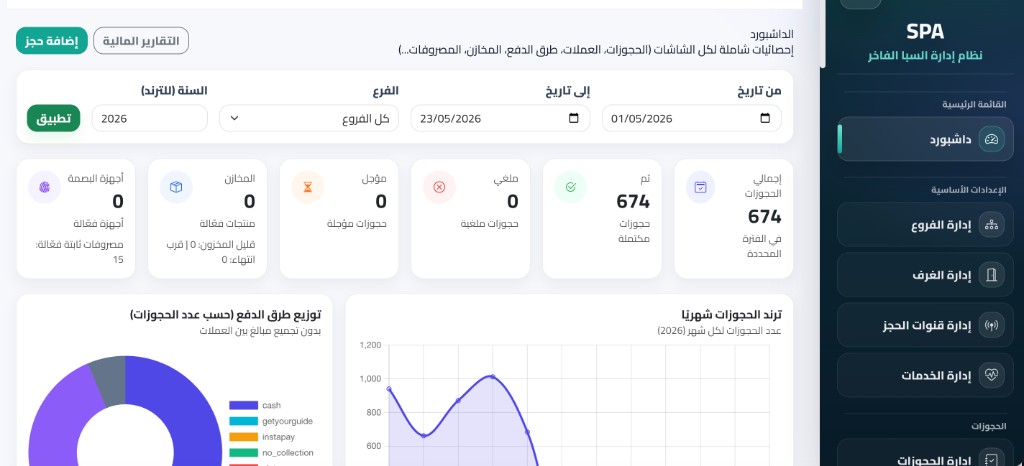
- Clear daily, weekly and monthly reports help the manager decide quickly.
A spa center needs more than a calendar. A successful spa management system connects the website and online booking with customer history, therapists, rooms, packages, payments, and branch reporting.
Essential Spa System Features
- Online booking with real-time availability
- Customer CRM with visit and preference history
- Therapist schedules, rooms, and service duration
- Packages, memberships, gift cards, and promotions
- Payments, commissions, and management reports
Website and System as One Experience
The customer should move from discovering a service to booking and confirmation without manual calls. The operations team receives the appointment instantly and avoids double booking.
A Full Day of Operations in a Spa Center
To see what the system must cover, follow a single client through the spa:
- Booking: from the website, phone or walk-in, showing real availability by room and therapist.
- Confirmation and reminder: an instant confirmation, then a reminder before the appointment to reduce no-shows.
- Reception: staff see the client's profile, preferences and any recorded health notes before the session starts.
- Treatment: the service, therapist, room and products used are recorded, so stock is deducted automatically.
- Payment: cash, card, package balance or gift card, with retail products on the same invoice.
- Follow-up: a thank-you or review request, and a suggested next appointment based on the service.
Therapists, Schedules and Commissions
Most disputes in a spa come from schedules and commissions. A good system links each therapist to the services they perform, sets their shift and breaks between sessions, and never books them outside that. Commissions follow written rules, such as a percentage per service or on product sales, and appear in a monthly statement both the therapist and management can see, ending long spreadsheet calculations and the arguments that follow.
Packages, Memberships and Gift Cards
Packages are an important source of revenue, but they need careful tracking: remaining sessions per client, expiry dates and each gift card's balance. When all of that lives in the system, reception sees the balance instantly at booking, and sessions are no longer used twice or packages expire without the client knowing. A reminder before expiry also encourages renewal.
Stock and Consumables
Each service uses known consumables such as oils, creams and disposables. When the system defines the quantity used per service, stock is deducted with every session, alerts arrive before items run out and products near expiry are flagged. Retail stock is kept separate from treatment consumables so profit figures stay accurate.
Client Experience and Loyalty
Clients who feel remembered come back more often. When the system stores each client's preferences, such as oil type, pressure or favourite therapist, the team can offer a personal experience without asking the same questions every visit. A simple loyalty programme, with points or a free session after a set number of visits, plus messages on occasions such as birthdays, works well. The key is clear rules that the system calculates automatically rather than relying on staff memory.
Running More Than One Branch
Growth brings new problems: a client books at one branch and uses a package at another, a therapist works at two locations, and prices may differ between sites. A unified system solves this with one client database for all branches, a schedule per branch, permissions that control what each branch manager sees, and a dashboard for senior management that compares revenue, occupancy and returning clients across branches.
Common Mistakes in Running a Spa
- Booking without the real service duration: ignoring preparation and cleaning time between sessions causes delays that build up all day.
- Selling packages without accurate records: leads to disputes with clients about remaining sessions.
- Discounts without permissions: every discount should be recorded with who gave it and why.
- Ignoring no-shows: without reminders or a clear cancellation policy, therapist hours are wasted.
- Relying on one person: when all the information lives in the receptionist's head, work stops when they are away.
Moving from Paper and WhatsApp to the System
Start by migrating client records, open packages and gift card balances carefully, because they are commitments to your clients. Then run bookings in the system from a set date, and train reception first since they use it most. During the first weeks, review bookings and payments daily to confirm data is entered correctly before relying fully on the reports.
Daily and Weekly Reports for the Manager
- Daily: revenue by payment method, completed sessions, no-shows and cancellations.
- Weekly: room and therapist occupancy, returning clients and the most requested services.
- Monthly: commissions, stock movement and branch comparisons.
For the bigger picture, read our guide to why spa management systems matter, and for the booking experience see our guide to spa websites with online booking.
Solo Spa Project
See the Solo Spa project, where the public website and management workflow create one consistent customer experience.
Explore our custom software service, review the project, or request a consultation.
Frequently asked questions
How do I prevent double booking in a spa?
With a system that checks room, therapist and service duration before confirming any appointment, whether the booking comes from the website, phone or reception.
How are therapist commissions calculated accurately?
By recording every session and product sale under the therapist's name and applying written commission rules in the system, with a monthly statement visible to the therapist and management.
Can the system manage packages and gift cards?
Yes. It tracks remaining sessions, expiry dates and each card's balance, and shows them to reception at booking and payment.
Is it suitable for a single-branch spa?
Yes. Even one branch benefits from organized bookings, commissions and stock, and more branches can be added later and compared from one dashboard.